PHONE US: (778) 484 1484


Why Do Some People Have Dimples When Smiling?
December 2, 2021
Why do only some people have dimples when smiling?
Dimples can occur in many places on the body, including the lower back, cheeks or chin. Have you ever wondered why some people have dimples (and sometimes just one) and others don’t?
Cheek dimples are only present in just over 35% of the population and they are caused by the muscle that is responsible for lifting the corners of our mouth into a smile: the zygomaticus major muscle. The zygomaticus major muscle is one of the muscles of facial expression and connects the zygomatic bone (cheek bone) to the skin at the corner of the mouth. Everyone has this muscle, but in the majority of the population, this muscle is smooth and has just one major “belly” of the muscle contributing to movement of the overlying skin.
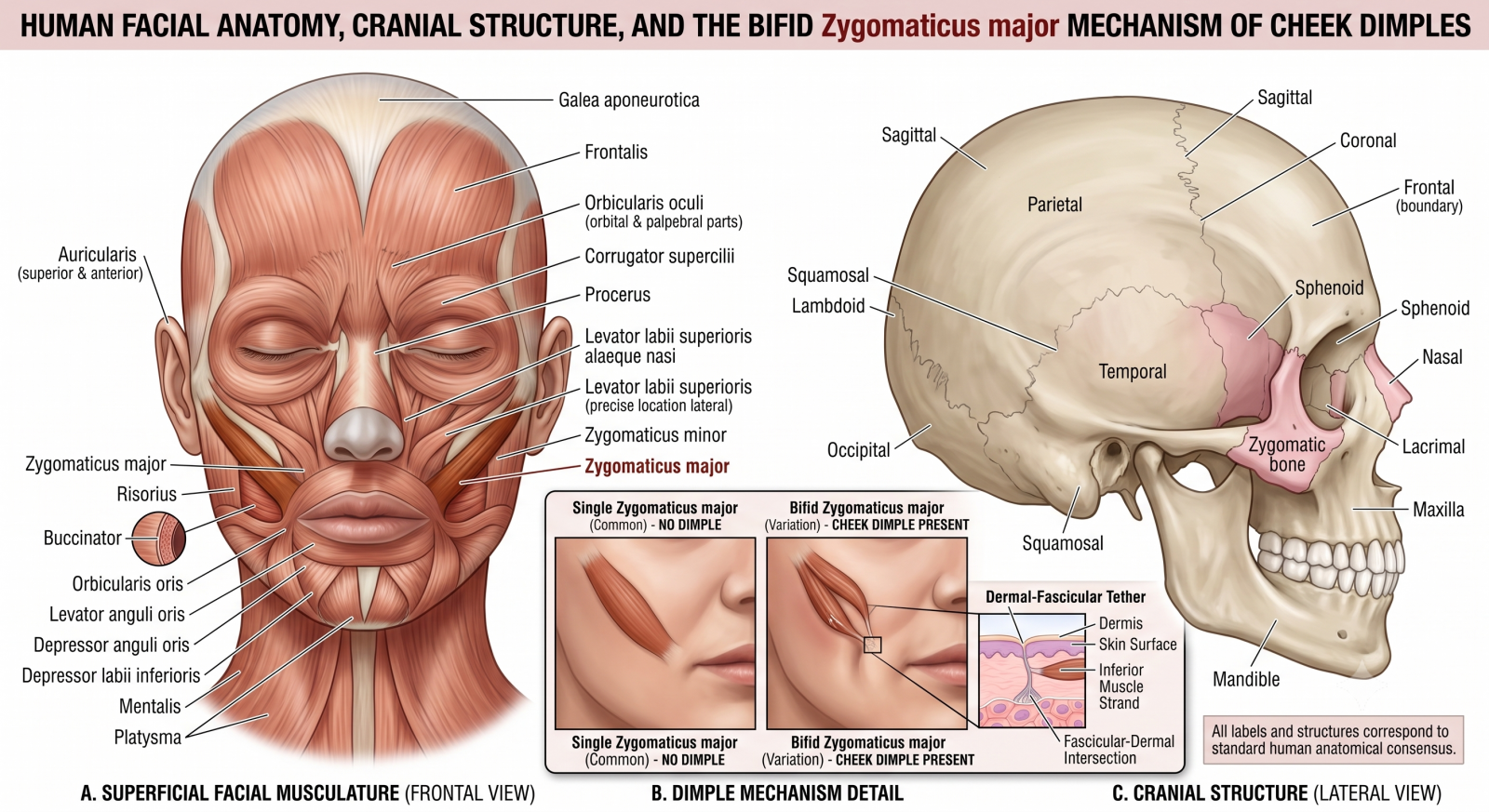
"Figure: A stylized representation of facial musculature and the dermal-tethering mechanism of a bifid zygomaticus major muscle."
In a minority of the population, this muscle splits. When a muscle splits, it is a variation of normal and is called a “bifid muscle.” The splitting of this muscle into two separate bellies means that the overlying skin will show a concavity, the dimple. Some people believe that dimples are a genetic anomaly, which could still be true; however, more research is needed to confirm this as fact.
The Smiles Around the Thanksgiving TableOctober 8, 2026
Some Thanksgiving smiles arrive before dinner does. ...
Read MoreScreen Time, School Stress and Sore Jaws: Recognizing TMJ Symptoms in TeensSeptember 16, 2026
The school day may end at the final bell, but a teenager's jaw can stay busy long afterward....
Read MoreAlways Tired After the School-Day Alarm? Signs of Sleep Apnea in Children to Watch ForSeptember 3, 2026
September mornings can be a shock to the system. After a summer of later bedtimes and slower starts,...
Read More